
What is a Business Worth? - Part 1
By Robert Prior
March 2026
When you’re considering buying or selling a business, regardless of whether it’s your first time or you’ve been through this process before, understanding what a business is really worth is essential. Professional and experienced advice on a business valuation will help you to make an informed decision and avoid costly mistakes.
What is a business valuation?
A business valuation is an informed estimate of what someone would pay for a business in today’s market. However, this is not (or at least it shouldn’t be) just a simple formula calculation.
Prepared properly, a business valuation involves assessing and assimilating all relevant factors affecting the business. Financial performance is important, but so too are intangible elements like customer relationships, brand reputation, location and growth potential.
Experienced Business Valuers combine these quantitative and qualitative aspects to then form a holistic view of what this business is truly worth, rather than just relying on a single generic multiple or formula.
What determines value?
Several factors influence what a business is worth and how they are valued, including:
Profitability and Consistency: Strong, reliable earnings increase value. For example, a business with steady profits and loyal customers will be worth more than one with unpredictable sales.
Growth Potential: Businesses with room to grow are more valuable. A business with expanding product/service lines and a growing customer base will likely be worth more than one that is stagnant.
Industry Trends: A thriving industry adds confidence to a purchaser. A business in a growing area is more appealing than in a declining one.
Owner Dependence: If the business can’t operate as profitably without the current owner, then its value will generally be less. A business with well-trained staff and good documented systems and processes is worth more than one where the owner knows and does everything.
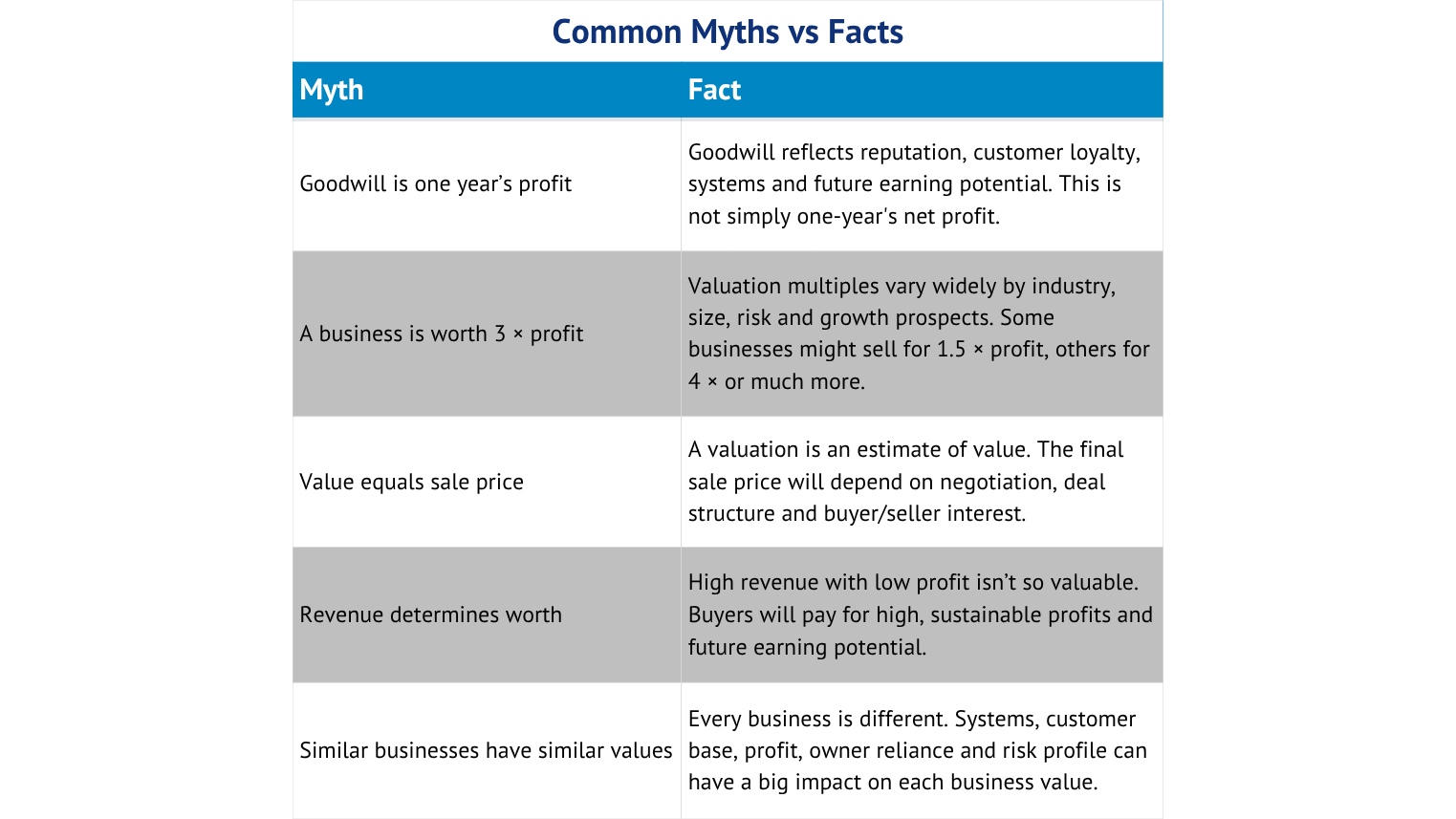
It’s all too often that I see people paying too much to buy a business that simply isn’t worth the asking price. They’ve usually done this because they haven’t sought professional advice on business value first, haven’t negotiated properly and/or haven’t conducted suitable due diligence. This then becomes very obvious when they later try to sell their business for more than they originally paid for it and struggle to attract buyers.
So, if you’re thinking about buying or selling a business, or just want to know what your business is actually worth then talk to us. We can not only advise you on this but also advise what you should be doing now to either improve your business value and future sale prospects or help you find a suitable business to purchase for the right price.
In our article next month, we explain how business valuers actually calculate value and what you can do to improve it.

The Myth vs The Truth
When it comes to Fringe Benefits Tax (FBT), one of the most common assumptions we hear is that dual cab utes are automatically exempt.
The reality is, it’s not that simple.
The Myth: Dual cab utes are exempt from FBT.
The Truth: A dual cab ute is only exempt if it meets both of the following conditions:
It is considered an eligible vehicle
It has limited private use
Is your ute an eligible vehicle?
Under the new rules:To qualify, the vehicle must be designed to carry:
A load of one tonne or more, or
More than 8 passengers, or
A load under one tonne but not primarily designed to carry passengers
Is your private use limited?
The ATO is clear that private use must be minor, infrequent and irregular.
This might include occasional personal trips, like going to the tip or helping a friend move house, but anything beyond that could impact your exemption.
Why it matters:
FBT is an area where small assumptions can lead to unexpected costs. What seems straightforward on the surface often depends on the detail, how the vehicle is designed and how it’s actually used.
If you’re unsure whether your ute meets the requirements, it’s worth reviewing before it becomes an issue.
Need clarity? contact our team for advice tailored to your situation.
